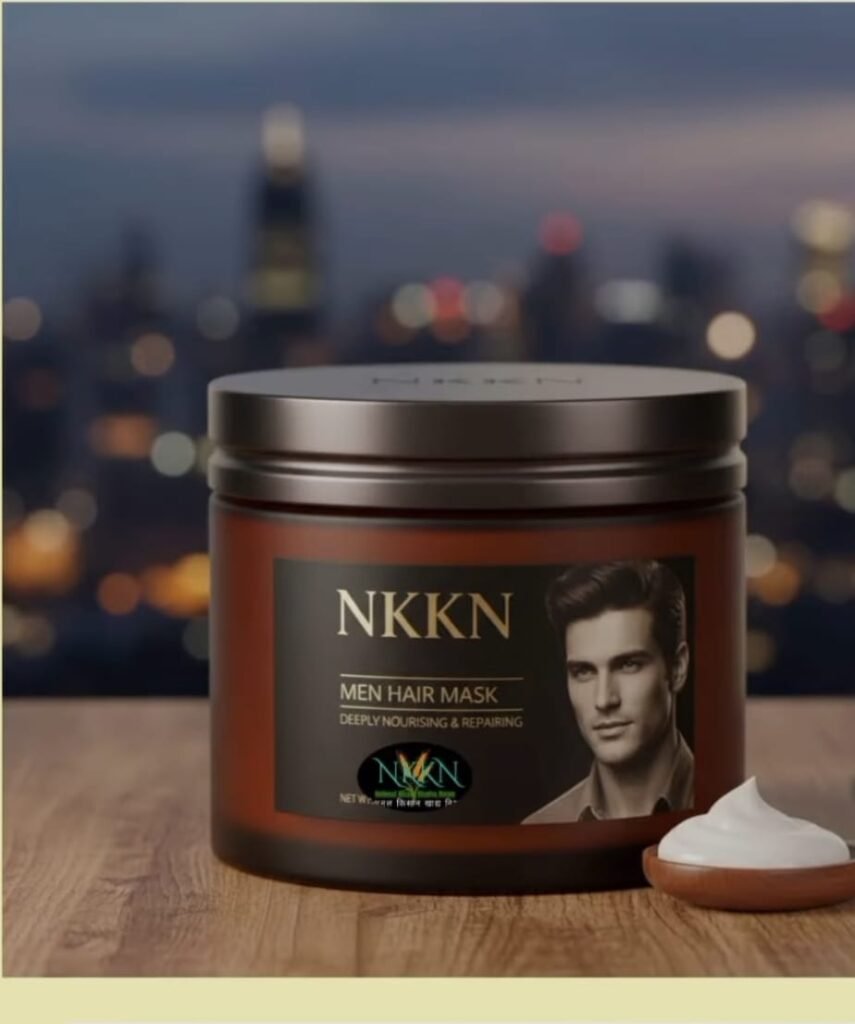

Healthy hair doesn’t happen by accident — it requires care, nourishment, and the right products. While shampoos and conditioners clean and soften, hair masks go deeper: they repair, strengthen, and restore the hair and scalp. For men — especially those with dryness, thinning, frizz, or damage from styling — a hair mask can make a powerful difference.
In this guide, we’ll cover everything about men’s hair masks — benefits, how they work, key ingredients, choosing the right one, how to apply it, and common questions answered.
1. What Is a Hair Mask?
A hair mask is a deep-conditioning treatment designed to deliver intense hydration, repair damage, and improve hair health. Unlike regular conditioners that work on the surface, hair masks penetrate deeper into the hair shaft and scalp, providing long-lasting nourishment.
Hair masks usually contain a higher concentration of active ingredients — such as oils, proteins, vitamins, and botanical extracts — that help strengthen and restore hair more effectively than everyday products.
2. Why Men Need Hair Masks Too
Hair care isn’t just for women — men benefit just as much from deep treatments. Here’s why:
Daily Styling & Grooming
Men who use gels, waxes, pomades, or sprays can experience buildup and dryness that ordinary shampoo and conditioner can’t fix.
Environmental Stress
Sun, pollution, hard water, and heat exposure can damage hair over time.
Dryness & Frizz
Scalp dryness and frizzy hair aren’t gender-specific — many men struggle with them.
Aging & Thinning
As men age, hair can become weaker, thinner, and more brittle. Masks help nourish and fortify hair from the inside out.
3. Key Benefits of Using a Hair Mask
Here are the main reasons to add a hair mask to your routine:
1. Deep Hydration
Masks deliver moisture where it’s needed most — especially useful for dry or coarse hair.
2. Repair & Strength

Proteins and nutrients help rebuild damaged hair cuticles, reducing breakage.
3. Improved Texture
Hair becomes softer, smoother, and easier to manage.
4. Scalp Health
Some masks contain soothing ingredients that calm irritation and support a balanced scalp.
5. Enhanced Growth
Healthy hair is stronger hair. By nourishing follicles and reducing breakage, masks can support growth.
6. Better Styling
With smoother, healthier hair, styling becomes easier and lasts longer.
4. What Makes a Good Hair Mask?
Not all masks are created equal. Here are the top ingredient categories to look for:
Natural Oils
These penetrate the hair shaft and lock in moisture:
- Argan Oil — rich in antioxidants
- Coconut Oil — hydrates deeply
- Jojoba Oil — balances scalp oil
- Castor Oil — strengthens roots
Proteins
Help rebuild hair structure:
- Keratin — restores strength
- Wheat Protein — improves elasticity
- Silk Protein — smooths and softens
Vitamins & Nutrients
Boost scalp and hair health:
- Vitamin E — antioxidant protection
- Biotin (Vitamin B7) — supports growth
- Panthenol (Vitamin B5) — retains moisture
Botanicals
Provide soothing or revitalizing effects:
- Aloe Vera — calming and hydrating
- Green Tea Extract — antioxidant & revitalizing
- Tea Tree Oil — antibacterial, supports scalp health
Humectants
Draw moisture into hair:
- Glycerin
- Honey
5. How to Choose the Right Hair Mask for Men
When selecting a hair mask, consider:
1. Hair Type
- Dry or coarse: choose rich, oil-based masks
- Fine or thinning: use lightweight formulas with proteins and vitamins
- Normal: balanced masks with hydrators and nutrients
2. Scalp Condition
- Dry or itchy: look for calming ingredients like aloe vera
- Oily scalp: choose lighter masks and avoid heavy oils at the roots
3. Goals
- Repair damage: protein + oils
- Boost shine: oils + humectants
- Promote growth: vitamins + biotin
6. How Often Should Men Use a Hair Mask?
Frequency depends on your hair needs:
- Dry / damaged hair: 2–3 times a week
- Normal hair: once a week
- Oily hair: once every 1–2 weeks
Masking too often can weigh hair down, so start with once a week and adjust based on results.
7. Step-by-Step: How to Apply a Hair Mask
Step 1: Wash Your Hair
Use your regular shampoo to remove dirt and buildup.
Step 2: Towel-Dry Slightly
Hair should be damp, not dripping.
Step 3: Apply Evenly
Start from mid-lengths to ends. If scalp-targeting, you can apply a small amount to the scalp too.
Step 4: Massage Gently
Massage the mask in to help it penetrate deeper.
Step 5: Wait 10–20 Minutes
Give the mask time to work.
Step 6: Rinse Thoroughly
Make sure no residue remains.
Step 7: Style as Usual
Enjoy softer, healthier hair!
8. Common Mistakes to Avoid
✔ Leaving it on too long
Longer isn’t always better — check instructions.
✔ Using too much product
A little goes a long way.
✔ Skipping conditioner
Masks don’t replace conditioner every time — use both if needed.
✔ Assuming one mask fits all
Choose based on your hair type and goals.
9. Men’s Hair Mask Routine — Sample Plans
For Dry, Frizzy Hair
- Shampoo
- Hair mask (rich, with oils)
- Conditioner (optional)
- Weekly routine
For Oily Scalp, Dry Ends
- Shampoo
- Hair mask on ends only
- Conditioner
- Every 1–2 weeks
For Thinning or Aging Hair
- Gentle shampoo
- Mask with vitamins & proteins
- Scalp massage
- Weekly
10. DIY Hair Mask Ideas (Natural Options)
If you prefer home remedies, try these:
Coconut Oil + Honey Mask
- 2 tbsp coconut oil
- 1 tbsp honey
Mix → apply → 15 minutes → rinse
Banana + Olive Oil Mask
- 1 ripe banana
- 1 tbsp olive oil
Blend → apply → 20 minutes → rinse
Aloe Vera + Yogurt Mask
- 2 tbsp aloe gel
- 2 tbsp plain yogurt
Mix → apply → 15 minutes → rinse
(Always patch-test for allergies before applying new ingredients.)
11. Hair Mask vs. Conditioner — What’s the Difference?
| Feature | Conditioner | Hair Mask |
|---|---|---|
| Purpose | Surface conditioning | Deep nourishment |
| Strength | Mild | Intense |
| Frequency | Every wash | Weekly or less |
| Ingredients | Lighter | Concentrated |
| Effect | Smooths hair | Repairs + hydrates |
Both are useful — but masks are stronger and more restorative.
12. Frequently Asked Questions (FAQs)
Q: Will a hair mask make my hair greasy?
A: Only if you use heavy formulas too often or leave them on too long. Choose products suited for your hair type.
Q: Can men with short hair use a hair mask?
A: Yes! Short hair can still benefit, especially at the scalp level.
Q: Can a hair mask help hair growth?
A: It won’t directly grow new hair, but by improving scalp health and reducing breakage, it supports healthier hair over time.
Q: Should I use a hair mask after every shampoo?
A: No — usually once a week is best unless your hair is very dry.
13. Tips to Maximize Results
Pair with a healthy diet (Omega-3s, proteins, vitamins)
Stay hydrated — it reflects in hair quality
Avoid hot water washes — they dry scalp
Use sulfate-free shampoo for gentler care
Regular trims keep hair looking neat
14. Who Should Use a Hair Mask?
Men with dry or damaged hair
Men who style hair frequently
Men experiencing split ends
Men with frizzy or coarse hair
Anyone looking for healthier, thicker-looking hair
15. Final Thoughts
A hair mask isn’t a luxury — it’s a smart addition to any man’s hair care routine. Whether your goal is hydration, repair, shine, scalp health, or stronger strands, the right mask can accelerate your results and make your hair look and feel better than ever.
Healthy hair doesn’t just happen — it’s built with care. And hair masks are one of the most powerful tools to help you get there.